I independently built StitchIt, a marketplace concept for finding and comparing local tailoring services, from the first idea through design and development to a deployed web app. The live app currently uses the name SilaiHub; this case study uses StitchIt as the portfolio project title.

MENU
07 / LOCAL SERVICES MARKETPLACE · END-TO-END BUILD
StitchIt.
A tailoring marketplace I built from scratch, from first idea to live web app.
THE PRODUCT
Bring a traditionally offline service into a clear digital journey. Customers need ways to find a suitable tailor and understand service options; tailors need a visible route to present their work and receive orders.
I built the product from scratch, taking it from initial concept through UX/UI design and development to deployment. I shaped the experience around both sides of the marketplace: customers discovering and comparing services, and tailors presenting their services and entering the platform.
A marketplace journey from discovery to order updates.
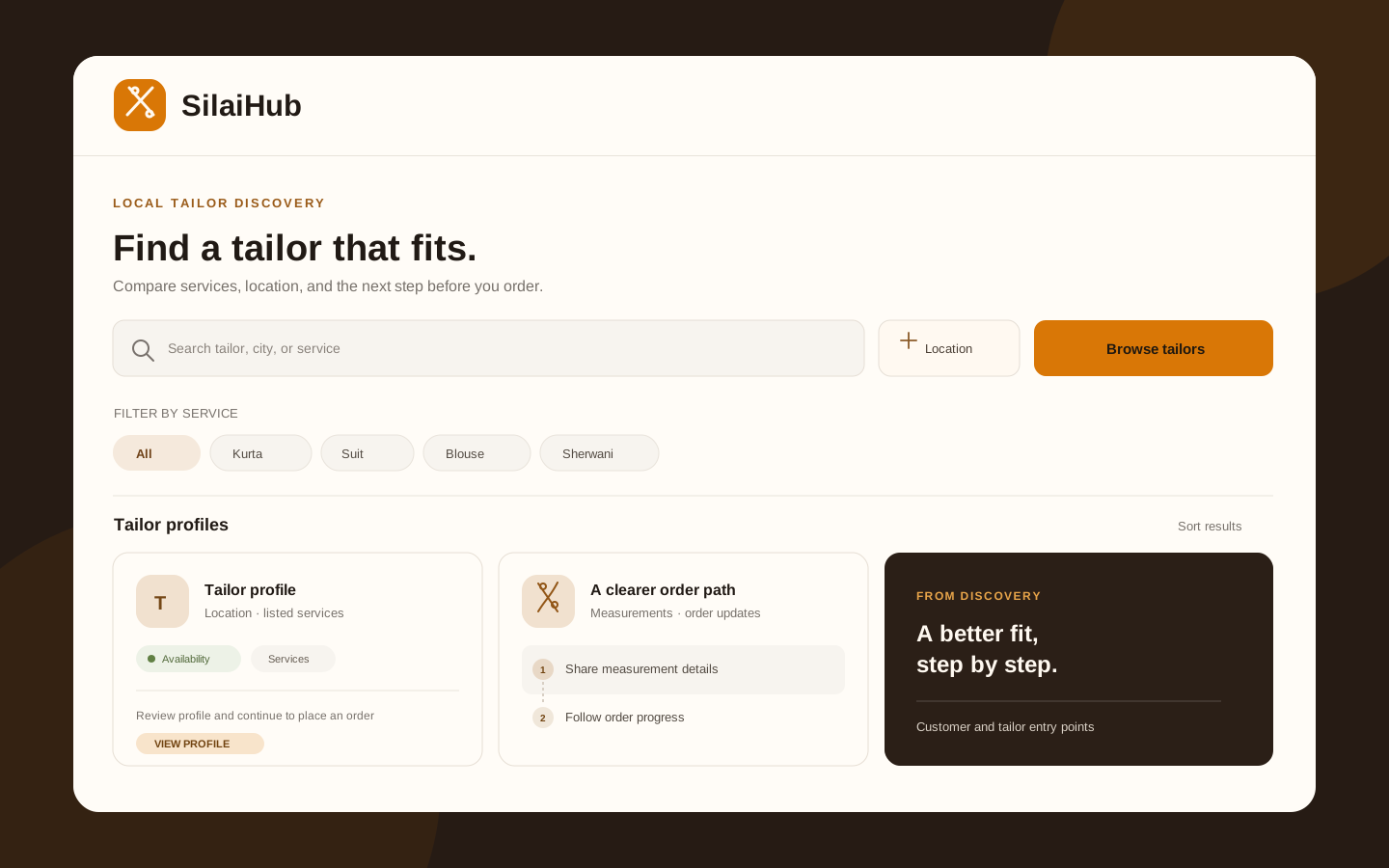
The live build presents discovery filters for tailoring categories, location-aware browsing, profile comparison, measurement entry, order progress, and customer/tailor account paths. These are observations of the deployed interface, not findings from user research or confirmation that every displayed marketplace record is a live business.
DESIGN FOCUSProduct direction: make the service, the person providing it, and the next step easier to understand before a customer commits to an order.
What the experience makes easier.
Three product decisions drawn from the publicly available build. The visual below is an illustration, not a captured product screen.
Bring service, location, and sorting into one browse step.
Search, service filters, location, and sorting help customers narrow the marketplace before opening a tailor profile.
The public browse page exposes a search field, location action, tailoring-category filters, and sort choices.Give profile cards a consistent comparison structure.
The browse cards bring identity, verification/availability labels, service categories, displayed price ranges, and response details into a scan-friendly unit.
The public browse view presents those fields on tailor cards; their underlying accuracy is not independently verified.Show what happens after a customer chooses.
The product's public homepage introduces measurements, order progress, and customer/tailor paths as connected parts of the service.
The live homepage presents measurement and order-progress examples; they are not treated here as verified transaction outcomes.These are design rationale and screen evidence, not measured user or business outcomes.
What I built from the ground up.
The delivered work is a deployed web app that brings customer-facing tailor discovery and order-related flows together with tailor-facing entry points. Ratings, customer/order counts, savings, and service assurances shown in the demo are unverified display content, not claimed project results.
Tailor discovery with search, location, service filters, and sorting
Tailor cards with profile, listed services, availability, and displayed price range
Customer-facing entry points for orders and tailoring services
Tailor-facing dashboard and onboarding entry points
A product flow that presents measurement sharing and order-progress updates
PRIMARY SOURCESVisit the live StitchIt / SilaiHub build ↗